The content is there. Your platform just cannot find it for them.
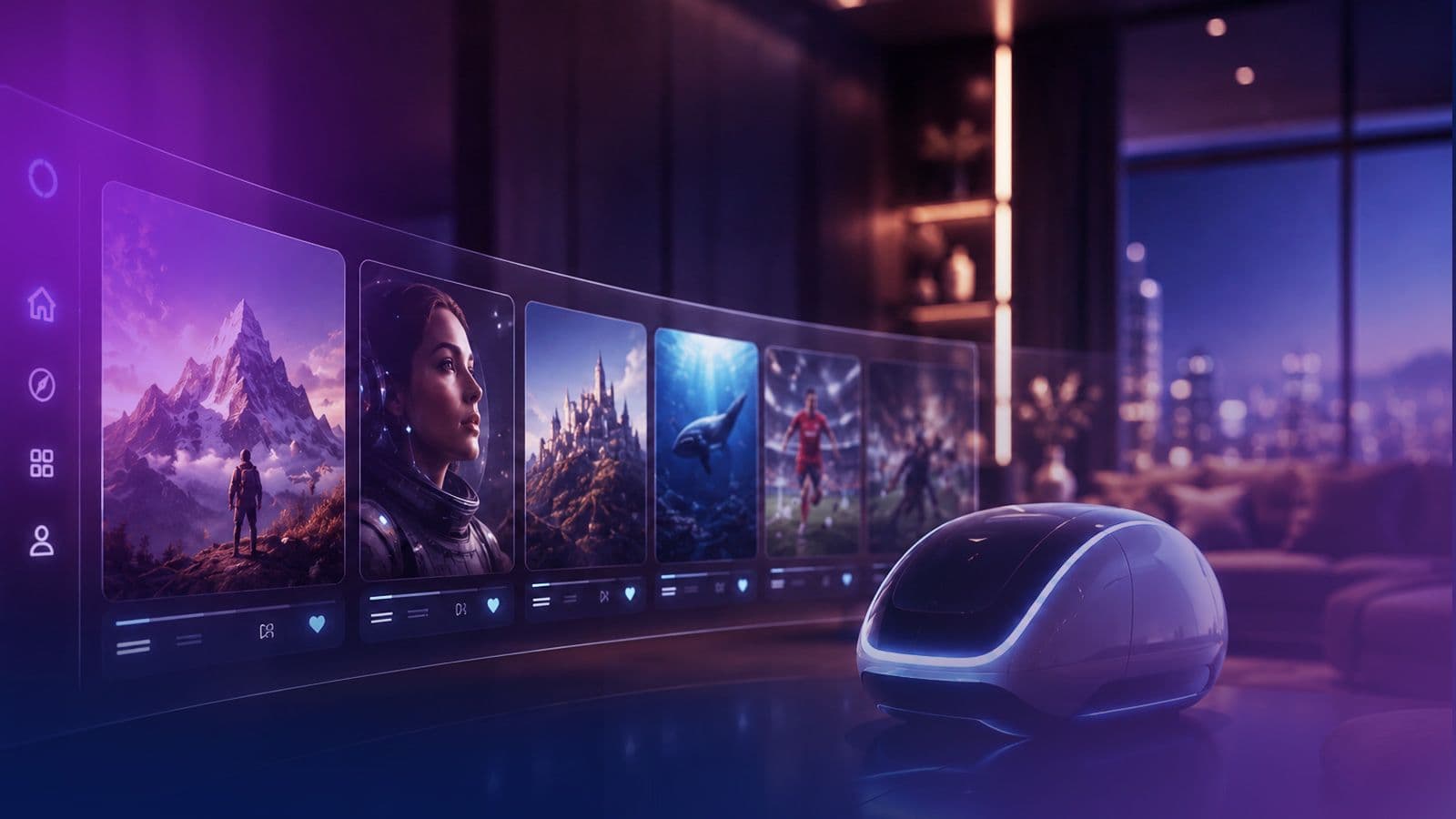
You have spent years and a serious budget building a catalog. Licensing deals, original productions, exclusives. Tens of thousands of titles. And most of it sits unwatched. Not because your viewers would not love it, but because your platform cannot put it in front of them at the moment they would say yes.
Conversational Discovery changes that. Instead of scrolling through carousels or typing keywords, viewers simply ask, by voice or text, in natural language. The platform understands intent, context, and meaning, not just matching words, to surface exactly what they are looking for. The need for it has never been more urgent.
That is not a content problem. It is a discovery problem. And it is costing you more than your churn model is showing. According to Deloitte Digital Media Trends 2025, 41% of consumers have canceled an SVOD service in the past six months, with poor discoverability a leading driver. And per Nielsen/Gracenote 2025, 49% of subscribers say they would cancel a service outright if they consistently struggle to find something to watch.
Look at how much of the catalog ever reaches a real audience. On most platforms it is a thin slice. The rest is not removed. It is unreachable by the people who would watch it, because the system has no way to connect the right title to the right viewer. The revenue you are leaving there is larger than the retention dashboards suggest, because a viewer who cannot find anything does not complain. They open a different app. Nielsen/Gracenote 2025 puts a number to it: viewers spend an average of 14 minutes a session just searching for something to watch, and 19% abandon the session entirely when they cannot find it, rising to 29% among 18 to 24-year-olds. The tools most platforms rely on were not built for this problem.
The ceiling on the old approach
The standard answer has been collaborative filtering. Find viewers who resemble you, show you what they watched. It works, up to a point. That point is when taste is not fixed. The viewer on a quiet Tuesday is not the one who binged through a limited series on a Saturday three weeks ago. Collaborative filtering knows your history. It does not know your moment.
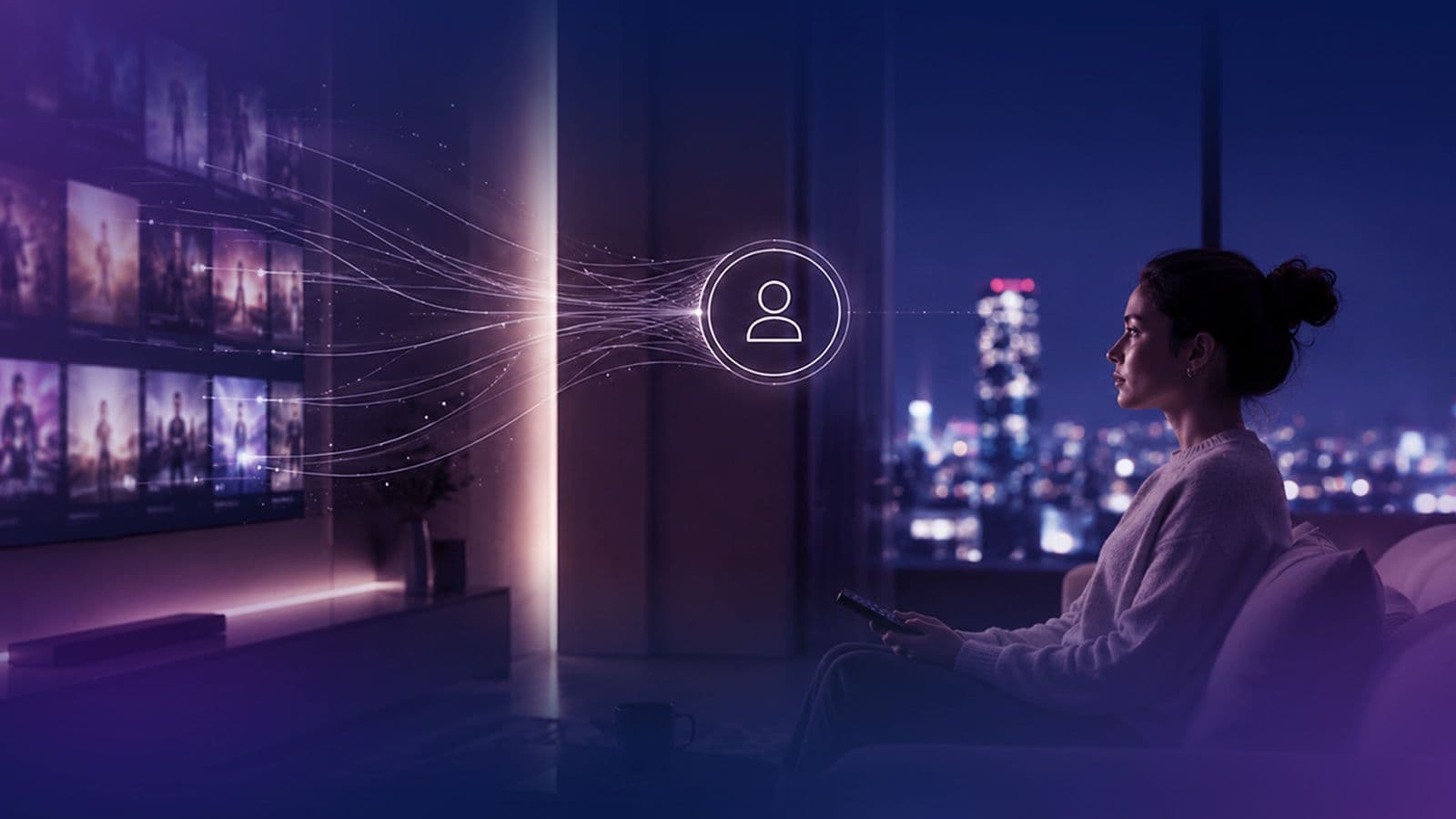
The more useful question is not what someone watched, but what they did. Did they finish? Did they skip the recap? Did they return the next evening, or vanish for two weeks? Did they search the second the credits rolled, or sit on the browse screen for eight minutes and close the app? A static taste profile throws all of that away. A discovery layer worth building treats it as the most valuable thing it has, and acts on it before the next session starts.
When the viewer hands you the moment directly
There is a newer signal platforms have barely started to use: the viewer telling you, in their own words, what they are in the mood for. AI-driven content discovery is the most direct version of reading the moment: the viewer states it outright. “Something light, nothing over ninety minutes.” “A thriller I can half watch while I cook.” No survey, no genre grid, just intent in plain language, typed or spoken.
A GPT-powered chat or voice interface sits within the app. The viewer asks questions like “show me a feel-good thriller with a strong female lead” or “find the scene where they discuss the merger” and the system returns precise, contextual results. It searches across titles, genres, moods, scenes, dialogue, and metadata using semantic, meaning-based indexing rather than literal matching.
The catch is that people are bad at this. They often know what they want without knowing what it is called, so they type something vague, or nothing at all, and a system that only works when the viewer is articulate is not a product, it is a demo. The hard part is not parsing the sentence. It is resolving a loose, half-formed request into a recommendation that fits, and grounding it in the catalog you hold rights to, in this market, tonight. A model that confidently suggests a title you do not carry has made the problem worse.
Done well, the system reads meaning rather than matching keywords, mood, theme, the thing a viewer only half-names, and it reaches past titles into scenes and dialogue, so “the part where they argue about the merger” resolves as cleanly as a genre search. Because it is a conversation, the viewer narrows things in plain back-and-forth instead of starting the search over, and the questions themselves, in aggregate, become a map of what to license and commission next.
This is where the two ideas stop being separate. The words tell you the intent. The behavior tells you whether you read it right. A platform that listens to both, and adjusts between them, is doing something collaborative filtering cannot describe.
A different engineering brief
This is not about one cleverer model on the old data architecture. It is about closing the loop between signal capture, inference, and interface response, fast enough that the platform learns continuously instead of in batches. Most pipelines were built for a smaller catalog and a calmer market. The intelligence layer has not kept pace with either.
And it now has to hold up across languages and libraries, the same loose request answered as cleanly in one market as in a dozen. Building that cross-market consistency is an engineering problem in its own right, one that sits right underneath the discovery layer.
The platforms pulling ahead treat OTT personalization and discovery as a live product that needs ongoing investment, not a feature that shipped once and got ticked off the list. It is the problem we have been solving with streaming platforms across three continents. The upside runs both ways: McKinsey 2024 found that companies excelling at AI-driven personalization see 5–15% increases in revenue along with improved retention, and fewer dead-end searches mean fewer “I can’t find it” drop-offs and complaints to absorb. It is also a capability that is visible to the viewer, demonstrable to the market, and not easy to replicate quickly, which makes it a competitive position, not just an engineering project. The catalog is table stakes now. What you do with it is where the contest sits.
So, two honest questions. How quickly does your platform learn? And how much of what you carry is reaching the audience it was made for? For most teams, the truthful answer to both is less comfortable than the headline numbers, and the platforms that keep subscribers tend to have already invested in the answer.
If this is the problem on your roadmap, come find us. We are at Stream TV to get into exactly this: recommendation architecture, catalog utilization, and what it takes to build discovery that learns, and that a viewer can talk to. StreamTV 2026. Denver. June 16–19.